¶ Crystallization
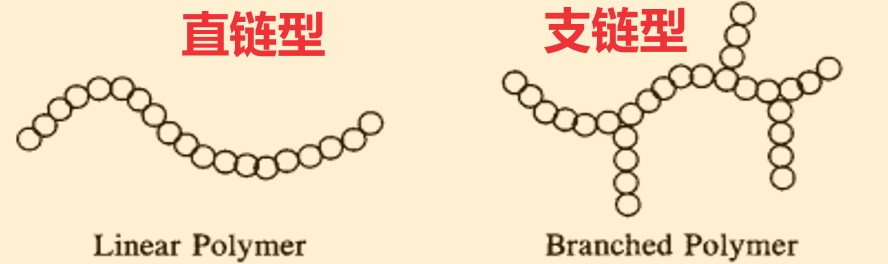
FDM/FFF 3D printing technology typically uses filament materials that are thermoplastic polymers (linear or chain-like macromolecules, which come in two types: linear and branched): that is, they become moldable at certain temperatures, solidify upon cooling, and can repeatedly undergo this process.
Among these thermoplastic polymers, they can be further divided into amorphous plastics and crystalline plastics.
|
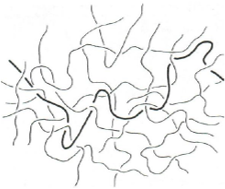
Amorphous Thermoplastic Polymers: Regardless of changes in the external environment (temperature), the molecules remain in a disordered state, distributed in an irregular pattern. (For example, PC, ABS) |
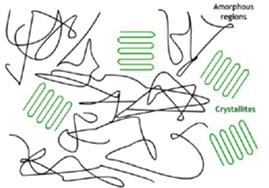
Crystalline Thermoplastic Polymers: When the external environmental temperature changes to a certain value, there is a tendency for the molecules to gradually arrange into an orderly state. (For example: Polyaryletherketones - PEEK/PEKK, etc., and Nylon - PA) |
 |
 |
Crystalline thermoplastics, after exhibiting crystallization, differ from amorphous or less crystalline thermoplastics in terms of mechanical properties, weather resistance, and other aspects.
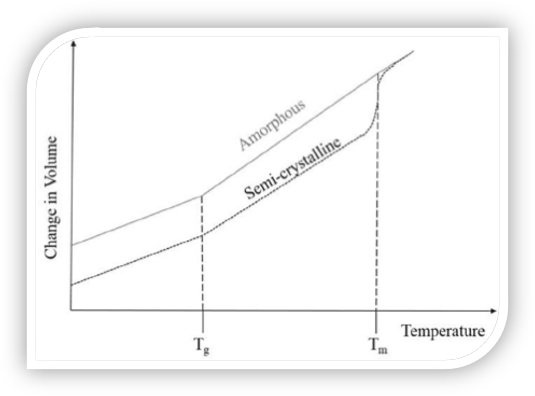
The temperature range for the crystallization phenomenon of polymers generally lies between Tg (glass transition temperature) and Tm (melting temperature of crystalline polymers). Temperatures that are too high can disrupt the orderly arrangement of molecules, and temperatures below the glass transition temperature can freeze the movement of molecular chains. However, even if the temperature is below the glass transition temperature Tg, secondary crystallization can still occur, albeit on a very long timescale, reaching the order of months or years. This process affects the mechanical properties of the polymer, causing a reduction in volume because the chains are packed more closely together